· Aotearoa New Zealand and the wider Pacific
In 2026, New Zealand's decisions on mining, offshore energy and commercial fishing have raised a question that approval notices cannot answer: what will actually happen to land, water and wildlife after the rules change?
Approval for a quarry expansion does not mean the next truckload of stone has been moved. Permission to examine a wind-farm site does not authorise construction. Tuna catch limits can rise while proposals to protect seabirds remain unresolved.
In its forecast in June , the Ministry for Primary Industries projected NZ$64.3 billion in exports from New Zealand's food and fibre sectors for the year ending 30 June 2026. Dairy, meat, horticulture, seafood and forestry contribute to that total. Their operations rely on land, water, marine ecosystems and overseas customers. The consequences extend to coastal communities, Māori customary users, infrastructure costs and ecosystems beyond the country's exclusive economic zone.
Fast-track decisions are testing the difference between speed and scrutiny
The Fast-track Approvals Act 2024 allows projects judged to have significant regional or national benefits to seek several approvals through a streamlined process. External expert panels assess applications and can impose conditions. The legislation shortens the route to a decision; it does not guarantee an approval or remove the project's effects.
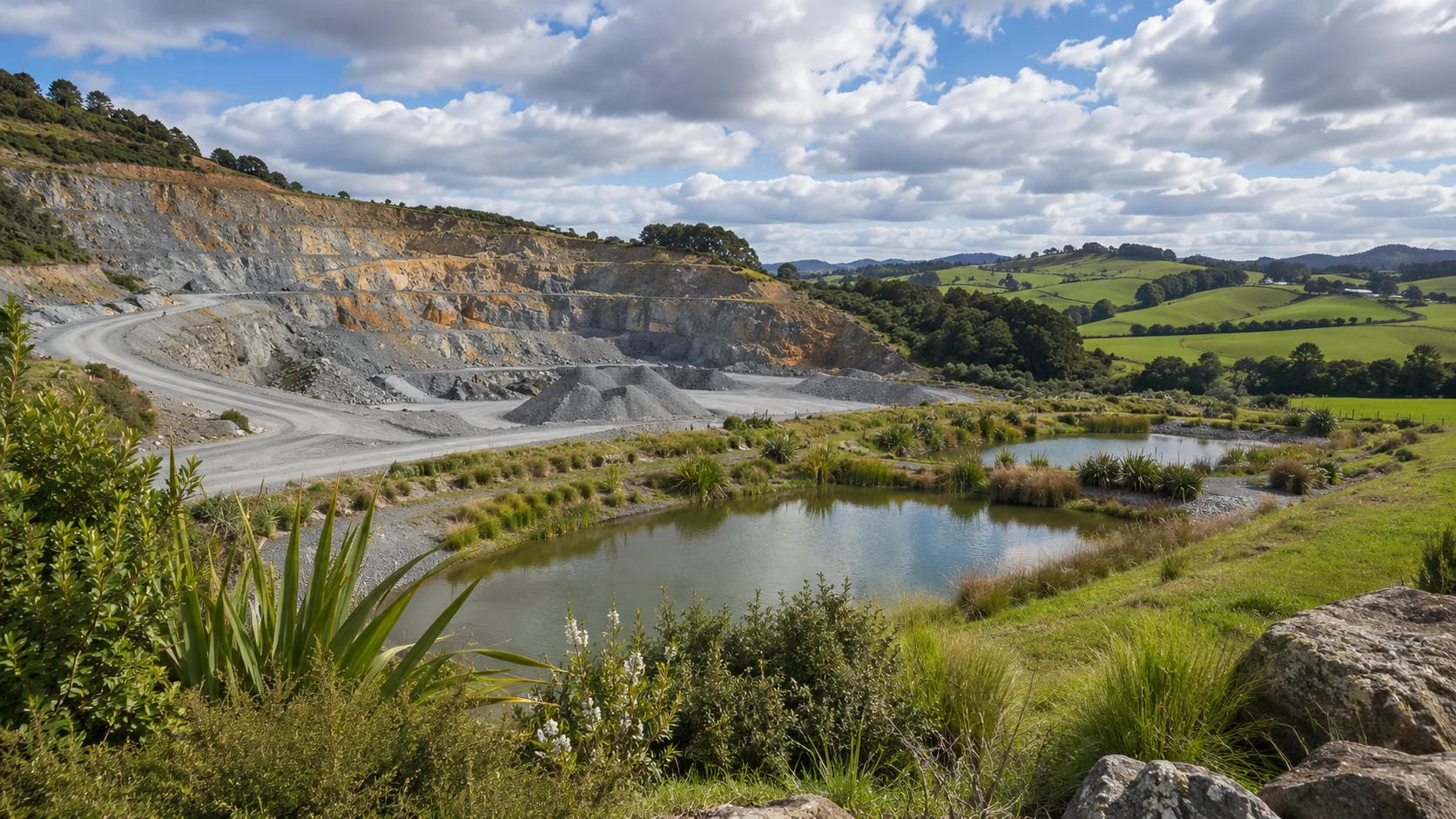
At Hunua Quarry , southeast of Auckland, ministers Chris Bishop and Shane Jones announced a fast-track approval on 15 October 2026. Operator Winstone Aggregates can expand the quarry and deepen the Symonds Hill Pit. The proposal provides for peak production of up to 5.4 million tonnes of processed aggregate annually . The project was the 37th approved under the process when ministers announced the decision.
Greywacke from the quarry supplies roads, houses and other infrastructure. A local source can spare some of the cost and truck traffic associated with hauling aggregate over longer distances. The government's approval announcement describes conditions covering truck traffic and the surrounding land and landscape. Dust, noise, rehabilitation and compliance records will matter once the expanded operation starts. An approval date says nothing about how those conditions will work once extraction expands.
A different fast-track outcome came in South Taranaki. Trans-Tasman Resources withdrew its Taranaki VTM seabed-mining application on 19 February 2026, after an expert panel issued a draft decision proposing to refuse marine consent. The company had proposed recovering vanadium-rich titanomagnetite concentrate from material extracted offshore. The official project record identifies the application as withdrawn . Withdrawal is not an authorisation to mine, although it does not permanently rule out a future proposal.
Deep-sea mining is also a Pacific fisheries issue
On 11 November, Mongabay reported that American Deep Sea Minerals and American Ocean Minerals Corporation had sought exploration rights from the US National Oceanic and Atmospheric Administration (NOAA) in the South Pacific. One proposed area, Eastern High Seas Pocket 3 , sits between the exclusive economic zones of the Cook Islands, Kiribati and French Polynesia ; another lies south of the Cook Islands' waters. Neither area is within New Zealand's exclusive economic zone.
Polymetallic nodules on the seabed contain nickel, manganese, copper and cobalt, metals used in industry and some energy technologies. The companies want to assess these deposits. Scientists and Pacific organisations have raised concerns about sediment plumes, deep-sea habitats, underwater disturbance and effects on migratory animals. Baseline data are limited. Exploration applications do not authorise commercial mining.
NOAA is assessing applications under United States law. The International Seabed Authority , created under the United Nations Convention on the Law of the Sea, has a separate international mandate to regulate mineral activities in the international seabed area. The United States has not ratified the convention. French Polynesia has objected to the approach, citing biodiversity and consultation concerns.
Western and Central Pacific Fisheries Commission rules also apply to the region's migratory tuna stocks, and Eastern High Seas Pocket 3 is one of its special management areas. Oceanic whitetip sharks, sea turtles, whales and seabirds cross these waters regardless of exclusive economic zone boundaries. The area is near French Polynesia's Tainui Atea marine protected area network. Mongabay's 11 November reporting sets out objections by Pacific organisations alongside the applicants' plans for environmental assessment.
No direct effect on New Zealand fisheries has been established from the proposed exploration. The unresolved question is how mineral exploration would sit alongside fisheries management and marine protection. Baseline surveys, sediment-plume modelling and consultation records would be needed to assess effects across boundaries. Any safeguards would also have to be enforceable.
Tuna recovery does not settle the seabird bycatch problem
In Brussels in October 2026, the Commission for the Conservation of Southern Bluefin Tuna (CCSBT) recognised 13 priority albatross species and identified high-risk areas for seabird interactions. Its members stopped short of adopting additional mandatory protections for those areas.
Albatrosses and petrels can take baited hooks from longline vessels before the gear sinks. Bird-scaring lines, weighted hooks and night setting reduce that risk when crews use them properly; third-party monitoring is needed to see whether they do. A model presented to CCSBT identified a substantial risk in the Tasman Sea between Australia and New Zealand . Without changes to vessel practice, the risk identified by the model remains.
The commission also set a southern bluefin tuna total allowable catch of 23,647 tonnes for 2027–2029 , 3,000 tonnes higher than before. Southern bluefin tuna have recovered from a severe historical low. Bycatch remains a threat to long-lived seabirds that breed slowly. Mongabay's account of the CCSBT negotiations covers both the higher quota and the lack of new compulsory protection measures. Fish stock recovery cannot stand in for a seabird mortality count.
New Zealand and Australia supported stronger seabird measures. The next evidence will come from observed bycatch, uptake of the mitigation gear and checks on vessels, rather than the commission's list of vulnerable species.
For hoiho, a fisheries rule has immediate local consequences
On the Otago Peninsula, Hoiho , the yellow-eyed penguin ( Megadyptes antipodes ), lives alongside a commercial fishery. The species occurs only in New Zealand. Mongabay reported in September that just 117 breeding pairs remained on the mainland, more than 80% fewer than in the 2008–09 breeding season. Disease, prey availability, marine conditions, predation and fishing all add pressure.
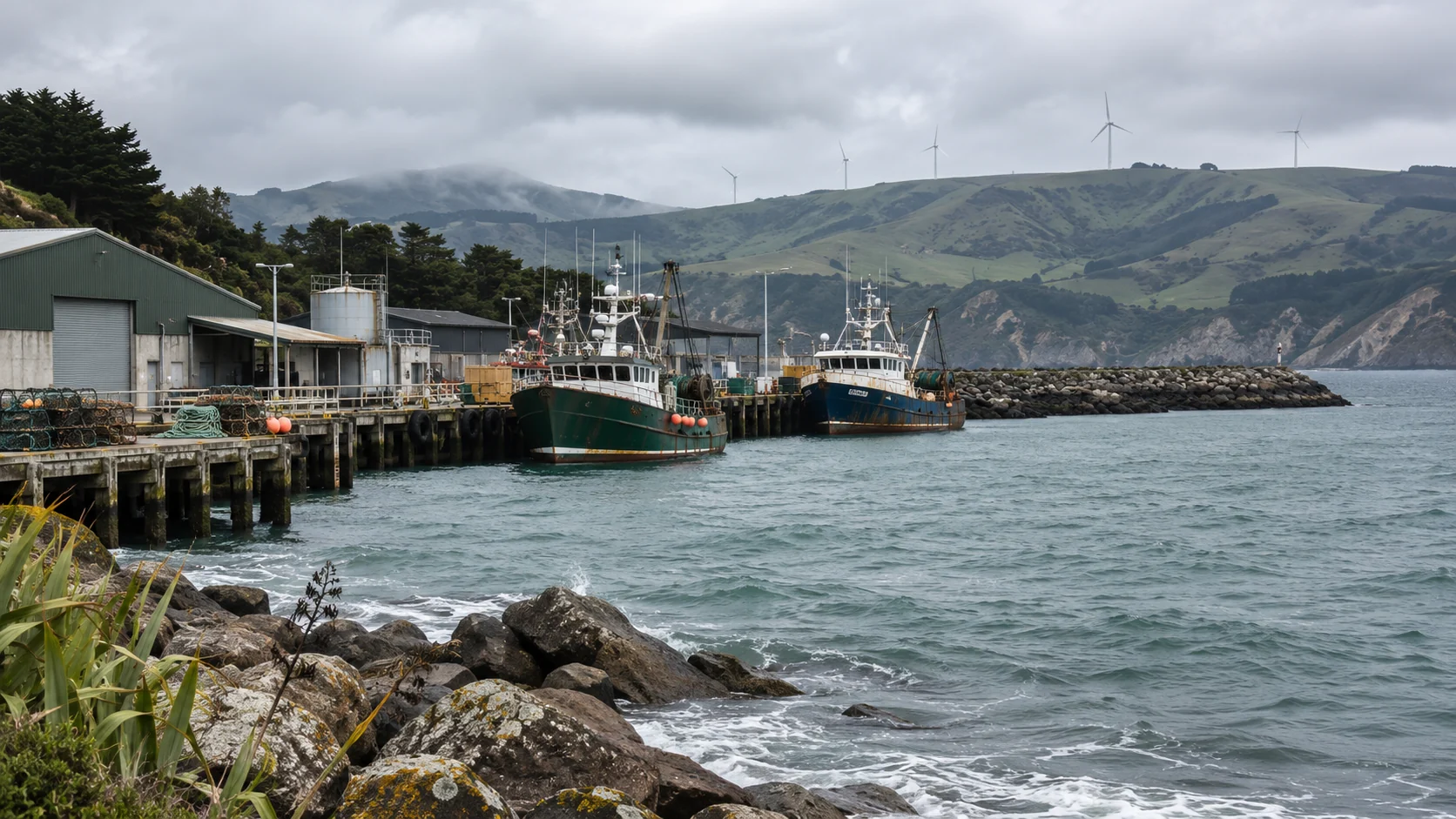
Fisheries New Zealand made the commercial set-net closure off the Otago Peninsula permanent, extending the prohibited area to eight nautical miles along the designated coast. It took effect on 16 September 2026. A separate fishing-related mortality limit of four hoiho per fishing year , with escalating responses as that limit is approached, began on 1 October. The limit sets a legal threshold; it does not imply that losing four birds would be ecologically harmless.
Rig, elephantfish and school shark are among the fish taken in set nets and sold for fish and chips. The closure affects small fishing businesses, and fishers have challenged its geographic extent. Conservationists, including people working with the Yellow-Eyed Penguin Trust, point to the tiny breeding population and the damage that further preventable deaths could cause. Hoiho is also a taoka , a treasured species, for Kāi Tahu .
The published fisheries rules explain the vessel restrictions. Breeding-pair counts and verified captures will help judge the closure. Changes in where boats fish matter too: displaced effort could put pressure on another species or stretch of coast.
Marine biosecurity is becoming an industry of its own
Two invasive seaweeds, Caulerpa brachypus and Caulerpa parvifolia , were found in 2021 around Aotea/Great Barrier Island . They formed dense seabed patches in parts of northern New Zealand, threatening native habitats, scallops and customary seafood gathering.
In the Bay of Islands , divers and local groups such as Conquer Caulerpa have used suction equipment to clear patches. Johnson Bros designed a remotely operated dredge. Advanced Aquarium Technologies New Zealand has worked on ultraviolet-C treatment delivered by underwater vehicles. University of Auckland scientists and iwi-led groups, including Pou Rāhui , have examined removal methods and their effects on marine life.
Heavy infestations died back in parts of the area during 2024 and 2025, though smaller patches persisted and the cause of the decline remains uncertain. The weed has not disappeared. Suction and dredging can disturb sediment; ultraviolet treatment must also be tested for harm to species that are not the intended target. Nationwide eradication is no longer considered achievable.
Divers, engineering firms and monitoring teams are now involved in the Caulerpa response. Biosecurity New Zealand regulates biofouling and ballast-water risks, while boats travelling between domestic harbours can spread the weed further. A closer account of the programme describes methods that remove plants quickly but leave harder questions about seabed recovery and impacts on other organisms.
Cleaner electricity is only part of the energy transition
In 2025, 88.5% of generation came from renewable sources in New Zealand, according to the Ministry of Business, Innovation and Employment (MBIE). Strong hydro inflows, record geothermal generation and more solar capacity helped push the renewable share to 92% in the June 2026 quarter . Across a 12-month period, solar electricity also overtook coal-fired generation for the first time.
Electricity makes up only part of New Zealand's energy use. Renewables accounted for 47.7% of total primary energy supply in 2025 ; industrial heat, freight and aviation still use other fuels. MBIE's Energy in New Zealand 2026 attributes some of the decline in energy demand to weaker industrial consumption. Wetter conditions and lower demand can boost a renewable share even without the same increase in lasting low-carbon capacity.
Dry winters will test whether generation can meet demand. Transmission constraints and factories' reliance on fossil-fuelled process heat are separate obstacles. Electricity-generation figures need to be read with fuel-use and industrial-demand data.
Offshore wind has entered the permitting stage, not the construction stage
Under the Offshore Renewable Energy Act 2026 , developers must obtain a feasibility permit before a commercial permit. Resource and marine consents are separate requirements before construction. The regime covers monitoring, safety zones, Māori consultation and decommissioning responsibilities.
On 19 October 2026 , MBIE opened the first offshore renewable energy feasibility-permit round for areas off Taranaki and off Waikato/South Auckland . Applications close on 19 April 2027 . These permits allow developers to investigate sites. They do not approve turbine construction or guarantee that a project will prove commercially viable.
Fishing grounds, shipping routes, seabirds, marine mammals, coastal views and grid connections all constrain offshore project design. The rights and interests of affected iwi and hapū require meaningful engagement. MBIE's first application-round notice sets out the areas and permit rules. Site surveys, cumulative-impact assessments and credible decommissioning plans will be needed before a proposed wind farm can be judged on more than its generating potential.
Freshwater and forestry expose the costs hidden in export figures
Dairy is New Zealand's largest food and fibre export earner. In June the Ministry for Primary Industries (MPI) forecast NZ$28.6 billion in dairy export revenue for the year to June 2026, and NZ$2.2 billion for seafood. Those were forecasts, not audited results. Prices and exchange rates can change export revenue without a corresponding shift in output or environmental conditions.
The Ministry for the Environment and Stats NZ's Our Freshwater 2026 gives a mixed picture of water quality. From 2005 to 2024, total nitrogen worsened at 31% of monitored river sites and improved at 30%. It worsened at 53% of monitored lake sites. Modelled nutrient-enrichment indicators for 2020–2024 rated 63% of lakes larger than one hectare as having poor or very poor health. The figures cover different measures, places and periods; they cannot assign all pollution to one industry.
Farms, wastewater systems, forestry and erosion affect waterways in different ways. Nitrate can travel slowly through groundwater, so changing land use may not improve a river straight away. The Māori concept ki uta ki tai :from mountains to sea:reflects how sediment, nutrients and water move between properties and through entire catchments.
From 4 June 2026 , the National Environmental Standards for Commercial Forestry required a Slash Mobilisation Risk Assessment before certain harvest operations on higher-risk erosion-prone land. If the assessment identifies high risk of woody debris moving off cutover slopes, the operation requires a controlled-activity resource consent instead of being permitted without one. MPI says the tool is not a prediction of landslides . It addresses the risk of logging debris entering waterways and damaging land or infrastructure downstream.
Export receipts say little about the price of removing silt from a water intake, repairing erosion damage or restoring a stream after a storm.
Global supply chains reveal what a sustainability claim cannot prove
On 11 November, US tuna company StarKist said it had stopped buying from vessels named in an investigation that alleged abuses against Indonesian migrant fishers. Labour advocates made the allegations; StarKist said it had appointed an external investigator. StarKist's parent, Dongwon Industries , operates in the international seafood supply chain. A purchasing suspension and an investigation do not establish what happened on every vessel.
The Roundtable on Sustainable Palm Oil (RSPO) and Indonesian plantation firm First Resources have faced scrutiny over indirect corporate links, forest loss and the reach of complaint systems. In separate work Mongabay covered in August, concessions largely complied with zero-deforestation commitments, but forest loss did not fall by a statistically distinguishable additional amount against the comparison group over the period assessed. Historical clearing and possible effects beyond the studied concessions complicate that finding.
Neither case proves misconduct by a New Zealand company. For importers and exporters, the difficulty is tracing a product beyond a first-tier supplier. Vessel identities, worker complaints, beneficial ownership, satellite land-cover data and third-party audits cover different gaps. Certification and corporate pledges cannot replace evidence of actual conditions. The StarKist case and deforestation-commitment analysis show why the distinction matters.
What remains unsettled after the 2026 decisions
The projects remain at different stages. The first offshore feasibility-permit round is open, with applications yet to be assessed. Otago's set-net rules are new. Trans-Tasman Resources withdrew its South Taranaki application, even as other companies seek exploration rights farther into the Pacific. Hunua's expanded quarry has approval, but its operating record has yet to develop.
The next tests arrive on different schedules. The first offshore energy feasibility-permit round closes on 19 April 2027. By then, the Otago set-net restrictions will have been in force for several months, and fresh breeding-pair counts and verified captures will be needed to judge whether fewer hoiho are dying in fishing gear.